

Commercial vs. residential fencing is the distinction between a fence system designed to secure business premises, including access control and durability, and a fence system designed to protect the privacy of the home, its appearance, its security, and its property boundaries. The correct decision will be based on the nature of your property, security level, choice of material, budget, and long-term maintenance prospects.
Key Takeaways:
- Commercial vs. residential fencing mainly differs in purpose: commercial fences prioritize security and durability, while residential fences prioritize privacy, appearance, and property boundaries.
- A commercial fence company usually handles larger sites, stronger materials, gates, access control, and commercial security fencing.
- Residential fencing options include wood, vinyl, chain-link, ornamental metal, and privacy fencing.
- Residential and commercial fencing materials can overlap, but commercial projects often require stronger posts, taller fence lines, reinforced gates, and heavier hardware.
- Guardian Fencing provides fence installation, repair, and material sales for property owners seeking practical, long-lasting solutions.
What Is Commercial vs. Residential Fencing?

Commercial fencing is designed for businesses, institutions, industrial premises, and storage yards, among other locations, where security, access control, and durability are of great concern. Residential fencing serves homes, where privacy, curb appeal, pets, children, and property boundaries are typically the primary concerns.
Chain link, ornamental iron, steel, security gates, privacy inserts, and taller fences may be used in commercial fencing. Residential fencing can be made of wood, vinyl, chain link, aluminum, or ornamental materials that match the appearance of the house.
Commercial vs. residential fencing is not only a question of property ownership. It concerns how the fence must perform on a daily basis.
How Is Commercial Fence Installation Different from Residential Installation?

The installation of a commercial fence is typically more complicated than residential fencing because the work can be on a larger site, use heavier materials, require secure gates, need more planning, and have tighter site specifications. Residential fencing tends to be smaller and more focused on comfort, privacy, and appearance.
A typical fence installation process may include:
- Site visit and measurements
- Property layout review
- Material selection
- Quote and timeline
- Utility locate planning
- Post installation
- Fence panel, mesh, or board installation
- Gate installation
- Cleanup and final review
According to Ontario One Call, homeowners and contractors need to order public utility locates before digging, even for fence work. This renders planning significant in residential and commercial work (Ontario One Call).
In commercial projects, commercial fencing contractors might also need to consider vehicle access, employee access, delivery routes, equipment storage, visibility, and security blind spots.
Commercial vs. Residential Fencing: What Are the Key Differences?
The key differences between commercial and residential fencing include purpose, strength, height, material grade, gates, cost, and installation requirements. A residential fence can secure a backyard, whereas a commercial fence can secure equipment, inventory, staff areas, parking lots, or restricted areas.
| Category | Commercial Fencing | Residential Fencing |
|---|---|---|
| Main purpose | Security, access control, durability | Privacy, safety, curb appeal |
| Common materials | Chain link, steel, iron, security mesh | Wood, vinyl, chain link, aluminum |
| Gate needs | Vehicle gates, access gates, security hardware | Walk gates, driveway gates |
| Installation scale | Larger and more technical | Smaller and more personal |
| Appearance | Professional and functional | Decorative and home-focused |
| Maintenance focus | Security and long-term performance | Appearance and property upkeep |
For example, chain link fencing may work for both residential and commercial applications. However, a business may need taller chain link, privacy inserts, reinforced posts, or a secure gate system. A homeowner may choose chain link to keep children or pets safely inside the yard.
Why Do Businesses Need Commercial Security Fencing?
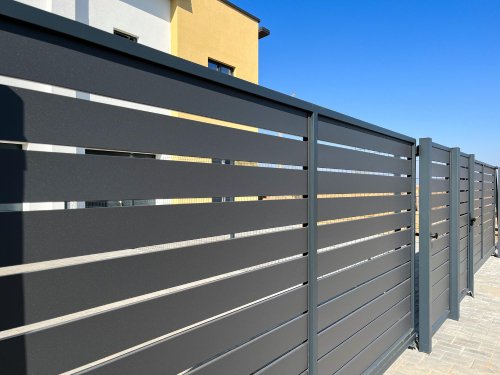
Businesses need commercial security fencing to reduce unauthorized access, protect equipment, control traffic, and establish a clear property boundary. Statistics Canada reported that in 2023, police-reported breaking and entering rates were 32% higher in rural areas than in urban areas. For commercial properties with equipment, inventory, yards, or restricted access points, fencing can be part of a broader site-security plan. A commercial fence can also make a site look more organized and professional.
Commercial security fencing is useful for:
- Storage yards
- Warehouses
- Retail properties
- Construction sites
- Municipal properties
- Multi-use commercial lots
- Industrial spaces
- Equipment areas
This is where it would help to hire a commercial fence company. Well-established commercial fencing firms recognize that security fencing needs to be more than a stand-up act. It has to comply with the property’s layout, gate access, traffic flow, and daily business processes.
When comparing commercial fencing companies, look for experience, knowledge of materials, effective communication, and evidence that the workers can handle both small and large projects.
What Are the Best Residential Fencing Options?
The most suitable residential fencing choices depend on your priorities for privacy, appearance, pets, children, budget, and maintenance. A homeowner who prioritizes maximum privacy might opt for wood or vinyl, while one who prefers a more affordable boundary might opt for chain-link.
For homes with pools, residential fencing is also a safety decision. Government of Canada injury data shows that swimming pools accounted for 34.9% of drowning-related hospitalizations, and 65.5% of those pool-related cases involved children under 15.
Common residential fencing options include:
- Wood fencing: Good for privacy and a natural look.
- Vinyl fencing: Low maintenance and clean-looking.
- Chain-link fencing: Practical, affordable, and suitable for pets.
- Ornamental metal fencing: Decorative and durable.
- Hybrid or horizontal fencing: Modern appearance with custom design value.
At Guardian Fencing, we offer a pricing guide for wood, vinyl, chain link, chain link with privacy inserts, and other types of fences. Commercial, ornamental, and hybrid fences may require a separate quote due to additional materials and project-specific circumstances.
Residential vs Commercial Fencing Materials: What is the Difference?

Residential and commercial fencing materials can be similar, but they are often built and specified differently. Commercial projects might require heavier-duty posts, stronger gates, heavier wire, taller fences, and stronger hardware.
Homeowners may prefer a material that balances aesthetics, privacy, and cost. For businesses, the material that strikes the best balance among security, durability, visibility, and site access is the best.
For example:
- Chain link works well for both homes and businesses.
- Vinyl is strong for low-maintenance residential privacy needs.
- Wood gives a warm, residential look but needs upkeep.
- Ornamental iron or aluminum can suit both residential and commercial properties.
- Commercial-grade gates are important when vehicles or equipment move through the site.
Guardian Fencing supplies and installs custom fences, including wood, chain-link, iron, aluminum, and vinyl, to meet individual needs.
Where Can You Find a Commercial Fence Company?
When searching for “a commercial fence company near me,” look for a local team that understands your property type, local weather, soil composition, fence type, fence repairs, and installation planning. Guardian Fencing operates in Cornwall, Ontario, and surrounding regions, and handles residential and commercial jobs.
A strong local commercial fence company should provide:
- Site measurements
- Material recommendations
- Clear quotes
- Installation planning
- Fence repair options
- Material sales
- Commercial fencing services
- Residential fencing options
Guardian Fencing also offers a 5-year labour warranty, providing long-term confidence in the workmanship.
Conclusion
Commercial vs. residential fencing comes down to purpose, performance, and property requirements. The home fence must ensure that your space is private, safe, and appealing, whereas the commercial fence must protect people, equipment, and business operations.
When comparing commercial fencing services, residential fencing, and materials for residential and commercial fencing, Guardian Fencing can assist you in planning the appropriate solution. Contact us today to request a quote, discuss your project, or choose materials for your next fence installation or repair.
Frequently Asked Questions
Can one company install both residential and commercial fences?
Yes. A fencing company that handles residential & commercial fences can install privacy fencing, decorative fencing, commercial security fencing, and gates, and provide repairs and material sales. The trick is to select a team with experience in residential and commercial projects.
How long does commercial fence installation take?
The installation of commercial fences depends on property size, fence type, site location, the need for gates, utility locates, and material availability. A small-business fence can be installed in a few days, while larger commercial security fencing projects can be more time-consuming in terms of planning and installation.
Is commercial security fencing worth it for a small business?
Yes, commercial security fencing might be a good investment for a small business that needs to safeguard vehicles, inventory, equipment, staff-only zones, or outdoor storage facilities. It can enhance access control and establish a clearer boundary around the property.
Can I use residential fencing materials for a business property?
Occasionally, depending on the objective. If the fence is primarily decorative, certain residential fencing materials might be an option. Commercial-grade materials are often preferred for durability, security, access control, and long-term commercial use.
How do I choose between commercial and residential fencing?
Make a selection based on the property type, security requirements, privacy objectives, appearance, budget, maintenance needs, and gate access. A residential property would typically require privacy or curb appeal, whereas a commercial property would typically require strength, access control, and durability.