
Wood vs. vinyl fencing is a choice between lower upfront cost and natural character on one side, and lower routine upkeep and a more consistent finish on the other. In Eastern Ontario, the better long-term investment depends on your budget, maintenance tolerance, property style, and how well the fence is installed.
Key Takeaways
- Wood fencing usually starts with a lower upfront price, while vinyl often requires a larger initial budget in exchange for less routine maintenance.
- Over a 10-year span, wood typically needs periodic cleaning, staining or sealing, and occasional board or fastener repairs; vinyl usually needs washing, inspection, and hardware adjustments.
- Eastern Ontario winters test the posts and footings under both materials. Proper installation matters as much as the fence material itself.
- Wood offers a warmer, more natural look and easier on-site customization; vinyl offers a uniform appearance that stays consistent with less finishing work.
- Guardian Fencing recommends the material that fits the property, not a one-size-fits-all approach: wood suits customization and natural character, while vinyl suits low-maintenance privacy and predictable upkeep.
Upfront Cost Differences in 2026
For most 2026 residential projects, wood vs. vinyl fencing comes down to a simple budget difference: wood typically costs less upfront, while vinyl usually carries a higher material cost. The exact gap can change quickly once height, style, gates, demolition, access, grade changes, and post requirements are factored in, so a per-foot number alone can be misleading.
A long-term fencing investment refers to the total value of the fence over the years you own it, including the initial quote, upkeep, repairs, appearance, and the risk of major replacement work. That is why the lowest starting price is not automatically the lowest ten-year cost.
Guardian Fencing installs both wood and vinyl fencing options, so the most useful comparison is based on the same property and scope. A clear estimate should separate the fence style, gate count, removal work, and any site conditions that affect installation, rather than hiding everything in one lump sum.
If your priority is keeping the initial budget low, wood often has the advantage. If you are comfortable spending more upfront to reduce future staining, sealing, and routine finish work, vinyl may make more sense. In either case, compare complete installed quotes rather than material-only prices.
Maintenance Requirements Over a 10 Year Span
Over a 10-year span, wood and vinyl fencing usually differ most clearly in maintenance. Wood is a natural material that benefits from regular inspection and finish care, while vinyl is designed to retain its colour and surface without painting or staining.
Canadian Wood Council notes that exterior wood durability depends on moisture, climate, and proper treatment. For a homeowner, that means regular inspection and finish care, with the exact schedule depending on exposure, the coating used, and how much sun, moisture, and weather the fence receives.
- Wood: clean dirt and organic buildup, inspect for loose fasteners or split boards, and re-stain or reseal when the finish shows signs of wear.
- Wood: trim vegetation away from the fence line so moisture does not remain trapped against the boards and posts.
- Vinyl: wash away surface dirt and mildew as needed, then inspect rails, posts, caps, latches, and hinges each season.
- Vinyl: damaged sections are not refinished like wood, so a cracked rail or panel may require component replacement rather than a cosmetic repair.
That does not make vinyl maintenance-free. Gates still need adjustment, hardware can loosen, and a hard impact can damage a panel. The difference is that routine appearance care is usually less intensive. Homeowners who enjoy maintaining and refinishing wood may not see that as a burden, while those who want a fence they rarely need to think about often value vinyl more highly.
How Each Material Handles Eastern Ontario Winters
Both wood and vinyl fencing can perform well through Eastern Ontario winters when the posts, footings, spacing, and gates are properly installed. Freeze-thaw cycles can displace weak post foundations, and no fence material can compensate for poor structural work beneath the fence.
Wood handles cold weather well, but moisture control matters. Properly selected and treated outdoor wood resists decay far better than untreated material, and keeping coatings in good condition helps limit water absorption, checking, and surface weathering. Individual boards are also relatively straightforward to replace if one section becomes damaged.
Vinyl does not rot, absorb water like wood, or require a protective stain. That gives it a practical advantage in wet snow, spring thaw, and repeated exposure to moisture. Cold conditions can make rigid materials less forgiving of sharp impacts, so snow clearing, gates, and equipment should still be handled with care.
For Guardian Fencing, the winter question comes down to workmanship. Every professional installation is backed by the company’s 5-year labour warranty, which covers the installation work itself. Material performance still depends on product specifications, site exposure, and normal care, but solid post-work and proper installation give either material a better chance of staying straight through the seasons.
Resale and Curb Appeal Considerations
Resale value and curb appeal are less about declaring one material universally superior and more about how well the fence fits the property. A fence that looks intentional, straight, clean, and appropriate to the home usually contributes more to buyer confidence than a material choice that feels out of place.
Wood works especially well when a homeowner wants warmth, texture, or a custom stain that complements a deck, shed, or landscaping. It can also be trimmed and adapted on site more easily, making it useful for properties with grade changes, unusual transitions, or a more traditional look.
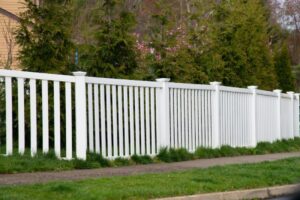
Vinyl appeals to buyers who want a neat, consistent privacy fence without the hassle of a regular staining schedule. White and neutral vinyl styles can look crisp for years with basic cleaning, and uniform panels can make a backyard feel finished and low-maintenance.
Before choosing based on resale value alone, look at finished projects and ask which material suits the house, lot, and surrounding properties. Guardian Fencing’s project gallery is a useful place to compare real installed fence lines rather than relying on catalogue images.
Which One Guardian Fencing Recommends for Which Property Type
At Guardian Fencing, we do not treat wood or vinyl as the automatic winner for every property. The better choice depends on what you value most after the installation crew leaves: starting budget, privacy, maintenance, appearance, flexibility, and how long you expect to stay in the home.
- Choose wood when you want a lower upfront cost, natural character, custom stain colours, or easier board-by-board repair and modification.
- Choose vinyl when you want strong privacy, minimal finish maintenance, and a uniform appearance that does not require painting or staining.
- Consider wood for rural, traditional, or heavily landscaped properties where natural materials complement the setting.
- Consider vinyl for busy households, rental properties, and long-term homeowners who prioritize predictable upkeep.
- For either material, prioritize proper posts, gates, drainage, cleanup, and a written warranty rather than small differences in the initial quote.
If you are deciding among several fence types, the most useful next step is to get a property-specific recommendation through Guardian Fencing’s fence installation services. A site visit can account for grade, access, layout, gates, and the look you want, which is more reliable than choosing from a generic material ranking.
Frequently Asked Questions
Is vinyl fencing more expensive than wood upfront?
Usually, yes. Vinyl fencing typically has a higher upfront material cost than a basic wood fence, though style, height, gates, demolition, access, and site conditions can affect the final installed price. The more useful comparison is the full quote plus expected maintenance over the years you plan to own the property, not the material price alone.
Does wood fencing require more repairs over time than vinyl?
Wood generally requires more routine maintenance over time because boards, finishes, and fasteners are exposed to moisture, sun, and seasonal movement. Vinyl avoids staining and sealing, but it can still need gate adjustments or replacement parts after impact damage. Proper installation reduces the risk of repairs for both materials, especially at posts and gates.
Which material holds up better against Ontario winters?
Both can handle Ontario winters when installed properly, but they fail in different ways. Vinyl resists rot and moisture, while treated and well-maintained wood can last many years and is often easier to repair, one board at a time. In Eastern Ontario, post depth, footings, drainage, and gate setup are critical regardless of the above-ground material.
Can wood and vinyl fencing be combined on one property?
Yes. Wood and vinyl can be used on the same property when there is a practical or visual reason to do so. A homeowner might use vinyl privacy fencing around a backyard and wood in a decorative or lower-visibility area. Transitions should be planned carefully so that heights, posts, gates, and colours look intentional rather than patched together.
Conclusion
Wood vs. vinyl fencing is not a simple contest between cheap and expensive. Wood often wins on initial cost and natural flexibility, while vinyl often wins on routine maintenance and long-term predictability.
For properties across Cornwall and Eastern Ontario, the installation beneath the panels matters just as much as the material you see above ground.
Choose the option that fits how you want to use and maintain your property, then make sure it is built right, built to last, and backed by clear workmanship accountability.
If you want a side-by-side recommendation for your own yard, book your free estimate with Guardian Fencing and get a clear quote for both materials where they make sense.